



A Hindu marriage is not just a social function but a holy union that joins two people, two families, and two life-long journeys. Being deeply based on ancient traditions and Vedic teachings, a Hindu wedding includes spirituality, culture and special rituals of love, commitment, respect and responsibility.
India is rich in various ethnic groups, and each region has its own marriage traditions. Although there can be variations in wedding ceremonies between North, South, East and West India, the essential components of a Hindu wedding are the same.
The rituals like Haldi ceremony, Mehendi ceremony, Kanyadaan, Mangal Pheras, Saptapadi and Vidaai are milestones of the marriage and are highly regarded from the cultural point of view.
With the development of modern society and traditions, young couples try to follow the compromise approach to their weddings, keeping their traditions alive and adding something personal to the celebrations. Be it an intimate or lavish wedding, the knowledge about each ritual and its meaning will make the celebration unforgettable and unique.
The following guide provides you with information about the main Hindu marriage rituals and their meaning.
What Is a Hindu Marriage?
A Hindu marriage is considered to be one of the sixteen significant sacraments known as 'Samskara' according to Hindu Philosophy. It is not only a contract but also a spiritual partnership for life, based on Dharma (Duty), Artha (Prosperity), Kama (Love), and Moksha (Spiritual liberation).
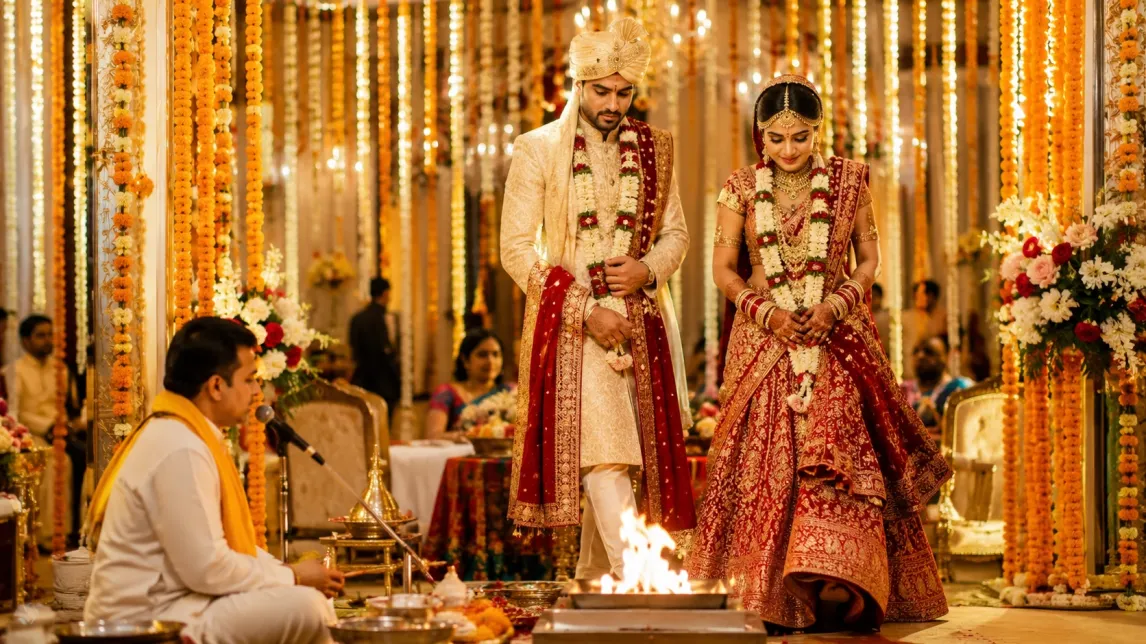
The wedding ceremony takes place before the sacred fire 'Agni,' who witnesses the vows of love taken by the bride and groom.
The following guide provides you with information about the main Hindu marriage rituals and their meaning.
Why Hindu Marriage Rituals Are Important ?
Every ritual has a symbolic purpose. Rather than being performed only for tradition, each ceremony teaches values that strengthen married life.
- Lifelong commitment
- Mutual respect
- Family unity
- Spiritual blessings
- Shared responsibilities
- Trust and companionship
Understanding these meanings helps couples appreciate the beauty of Hindu marriage traditions beyond the celebrations.
Pre-Wedding Rituals in a Hindu Marriage
Most Hindu wedding rituals begin several days before the wedding itself. These ceremonies prepare the couple physically, emotionally, and spiritually for married life.
Ganesh Puja
The wedding ceremonies usually start with Ganesh Puja. This puja is performed in honor of Lord Ganesha so that he blesses the marriage ceremony with an easy and trouble-free journey. This ritual is performed by family members in order to bring wealth and happiness to the couple’s life.
Although quite easy, this ceremony signifies the beginning of the Hindu wedding ceremonies.
Haldi Ceremony
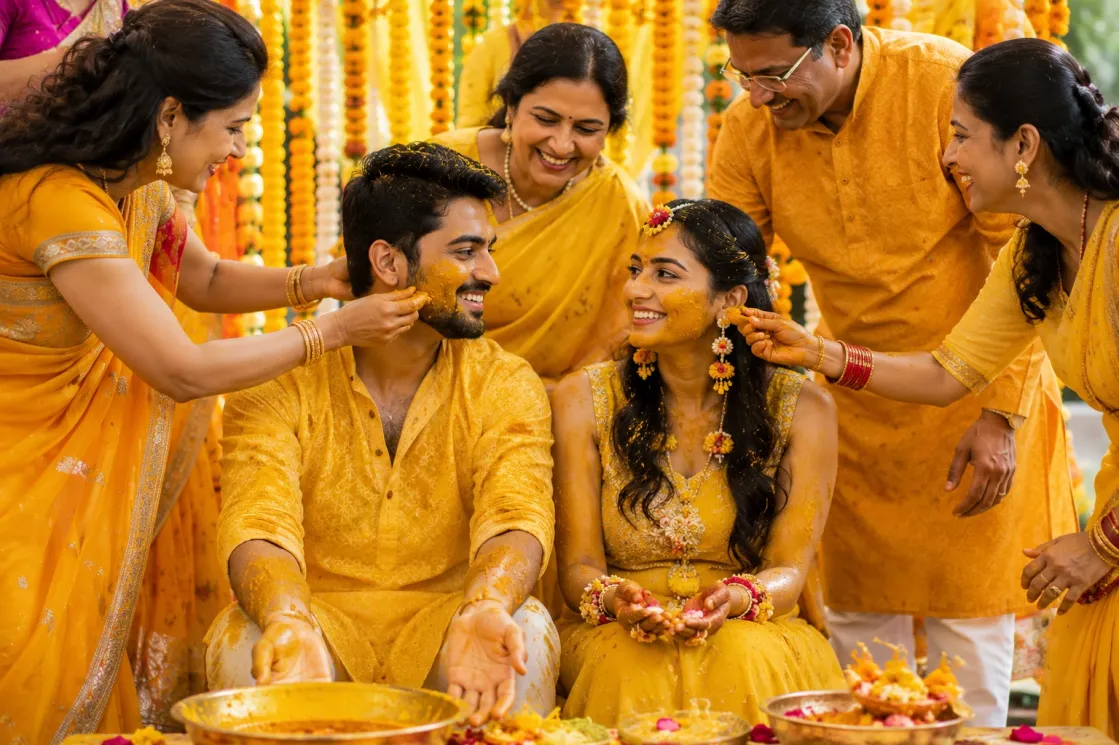
The Haldi ceremony is one of the most joyful and colorful pre-wedding rituals.
During this ceremony, a paste made from turmeric, sandalwood, and other natural ingredients is applied to the bride and groom by family members and close friends.
Traditionally, turmeric is believed to:
- Purify the body
- Enhance natural skin glow
- Protect against negative energy
- Bless the couple before marriage
Today, the Haldi ceremony has also become a lively family celebration filled with music, laughter, and colorful decorations.
Mehendi Ceremony
The Mehendi ceremony is another important event before the wedding.
Beautiful henna designs are applied to the bride's hands and feet, while close family members and friends also participate in the celebration.
Traditionally, Mehendi symbolizes:
- Love
- Good fortune
- Prosperity
- New beginnings
Many families organize music, dance, and cultural performances during one of the most enjoyable parts of a traditional Hindu wedding.
Wedding Day Rituals
The wedding day includes several sacred Hindu wedding ceremonies, each representing an important step toward married life.
Although customs vary across India, these rituals remain central to most Hindu marriage customs.
Baraat – The Groom's Grand Arrival
Baraat symbolizes the coming of the groom at the wedding place accompanied by his family and friends.
The groom is warmly received by the bride’s family through music, dancing, and celebrations.
These joyous processions represent the beginning of the marriage of two families rather than two people.
Jaimala – Exchanging Garlands
The Jaimala ceremony is often the first ritual where the bride and groom meet on the wedding stage.
Both exchange floral garlands as a symbol of mutual respect, acceptance, and love.
While it is one of the most photographed moments of the wedding, it also represents the couple's willingness to begin a new chapter together.
Kanyadaan – A Sacred Blessing
Of all the rituals performed in a Hindu wedding, Kanyadaan is regarded as one of the most emotionally charged.
Conventionally, the hands of the bride are placed in the hands of her groom by the latter’s parents through some prayer that brings happiness and success to the couple.
Kanyadaan should not be taken to mean the giving away of the bride since many families today see it as the blessing of the couple by their parents in trust and goodwill.
The Sacred Fire Ceremony Begins
The most spiritually important event during a Hindu wedding occurs in the presence of the holy fire, Agni, since it is thought to see all the vows taken by the couple.
These rituals represent the union of a couple for their lifetime.
Mangal Pheras – Walking Around the Sacred Fire
The Mangal Pheras are among the most important Indian wedding rituals.
The bride and groom walk around the sacred fire while sacred Vedic mantras are recited by the priest.
Each round represents important values such as:
- Mutual respect
- Prosperity
- Family well-being
- Love
- Trust
- Health
- Spiritual growth
These vows remind the couple that marriage is based on partnership, understanding, and shared responsibilities rather than individual goals alone.
Saptapadi – The Seven Sacred Steps
After the Mangal Pheras, the bride and groom perform Saptapadi, one of the most important Hindu marriage rituals. The word Saptapadi means "seven steps." Together, the couple takes seven steps around the sacred fire while making promises that guide their married life.
According to Hindu tradition, these seven vows symbolize the foundation of a successful marriage.
Meaning of the Seven Vows of Marriage
Each step represents a lifelong commitment:
- First Step: Promise to provide food, care, and support for each other.
- Second Step: Pray for physical, emotional, and spiritual strength.
- Third Step: Work together to achieve prosperity and financial stability.
- Fourth Step: Build a happy family based on trust and love.
- Fifth Step: Pray for the well-being of future generations.
- Sixth Step: Promise lifelong friendship, loyalty, and understanding.
- Seventh Step: Commit to remaining faithful companions throughout life.
These seven vows of marriage remind couples that marriage is a partnership built on shared responsibilities, mutual respect, and unwavering commitment.
Sindoor Ceremony and Mangalsutra
Following Saptapadi, the wedding ceremony continues with two symbolic traditions that represent the beginning of married life.
Sindoor Ceremony
The groom applies Sindoor (vermilion) to the bride's hair parting.
The Sindoor ceremony symbolizes:
- Marriage
- Commitment
- Blessings for a long and happy married life
Across many Hindu communities, Sindoor remains a respected symbol of marriage.
Mangalsutra Ceremony
The groom ties the Mangalsutra around the bride's neck.
The sacred necklace represents:
- Love
- Trust
- Protection
- Lifelong companionship
Although designs vary across different regions of India, its emotional significance remains the same in every marriage ceremony.
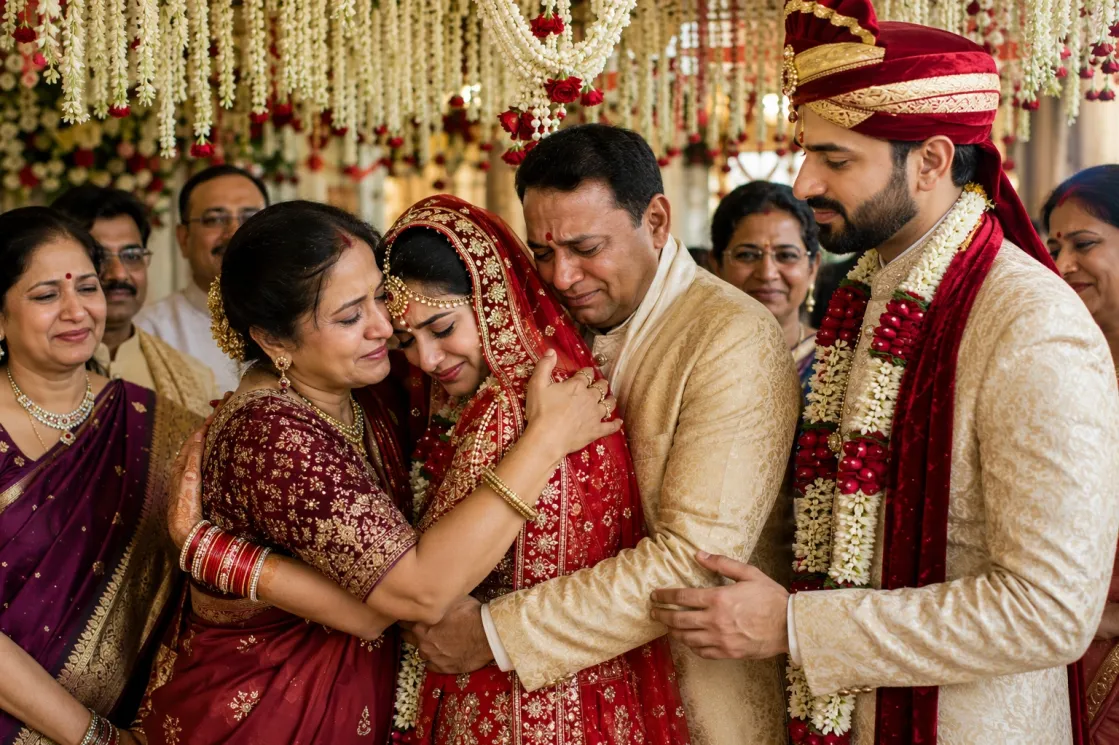
Vidaai – An Emotional New Beginning
The Vidaai ceremony marks one of the most emotional moments of a traditional Hindu wedding.
The bride bids farewell to her parents and family as she begins a new chapter with her husband.
The Meaning Behind Vidaai
While often emotional, Vidaai also symbolizes:
- Gratitude toward parents
- New responsibilities
- Acceptance of a new family
- Hope for a joyful future
Modern families increasingly view Vidaai not as a separation but as the beginning of a new relationship between two families.
The Spiritual Meaning Behind Hindu Marriage Rituals
One of the most beautiful aspects of a Hindu wedding is that every ritual carries a deeper message rather than being performed simply out of tradition.
Every Ritual Teaches a Life Lesson
Each ceremony reflects an important value:
- Ganesh Puja reminds couples to seek blessings before beginning a new journey.
- Haldi symbolizes purification and positive energy.
- Mehendi represents happiness and prosperity.
- Jaimala teaches mutual acceptance.
- Kanyadaan highlights parental blessings and family support.
- Mangal Pheras emphasize shared responsibilities.
- Saptapadi focuses on lifelong partnership.
- Sindoor and Mangalsutra symbolize commitment.
- Vidaai reflects gratitude, emotional strength, and new beginnings.
Understanding these meanings transforms a wedding from a series of ceremonies into a lifelong lesson in love, respect, and responsibility.
How Hindu Marriage Traditions Are Evolving ?
Modern-day couples are adopting a modern lifestyle yet maintaining the traditions of Hindu marriages.
The use of technology, destination wedding concept, online invitation cards, and green wedding have revolutionized the process of organizing weddings. Yet, the spiritual importance of Mangal Pheras, Saptapadi, and Sindoor ceremony still holds its place in most of the Hindu rituals.
Balancing Tradition and Modern Values
Many couples now:
- Choose sustainable wedding decorations.
- Reduce food waste.
- Use digital invitations.
- Include personalized wedding vows.
- Spend more time understanding each other before marriage through courtship and open communication.
This balance allows couples to honor tradition while creating celebrations that reflect their own personalities and values.
Conclusion
A Hindu marriage is the most beautiful combination of religion, culture, family values, and commitment for a lifetime. Each rite, starting from Ganesh Puja and Vidaai, has a meaning and adds to the bonding between husband and wife.
Even though there have been changes in the styles of weddings, the essential elements of Hindu marriage ceremonies will always be love, trust, respect, responsibility, and companionship.
By getting an insight into the meanings of each ritual, the newlyweds will be able to understand the true meaning of marriage. Find your partner with proper hindu rituals on our matrimonial platform. It does not matter whether your wedding is modest or lavish, but marriage is all about your vows and your life together.
When you embark on this journey together, do not forget that each rite is not only tradition but also the reminder of the values that lead to a successful marriage.
Read Our More Blogs
- How to Find a Genuine Life Partner: 10 Smart Tips
- Courtship period before marriage: Why It's Necessary?
- Arranged Marriage Guide: Everything You Need to Know Before Saying Yes
- 10 Relationship Tips Every Couple Should Follow Before Marriage
Frequently Asked Questions About Hindu Marriage
1. Which are the important Hindu marriage rituals?
Some of the important rituals of Hindu marriage are Ganesh Puja, Haldi, Mehendi, Baraat, Jaimala, Kanyadaan, Mangal Pheras, Saptapadi, Sindoor ritual, Mangalsutra ritual, and Vidaai.
2. Why is Saptapadi an important ritual in Hindu marriage?
Saptapadi signifies the seven holy vows taken by the bride and groom in Hindu marriage. The vows revolve around love, faithfulness, prosperity, family, loyalty, friendship, and companionship.
3. Explain the importance of Mangal Pheras.
Mangal Pheras involve walking of bride and groom in a clockwise direction around the sacred fire while taking vows for shared responsibility and commitment to each other throughout marriage.
4. What does the Haldi ritual signify?
The Haldi ritual signifies the process of cleansing, positivity, and blessings prior to the marriage ceremony. It also makes the bride and groom appear more radiant naturally.
5. Do Hindu marriage rites differ in various parts of India?
Yes, although the underlying principles are still the same, Hindu wedding rites can differ according to different parts of India such as North, South, East, and West.